
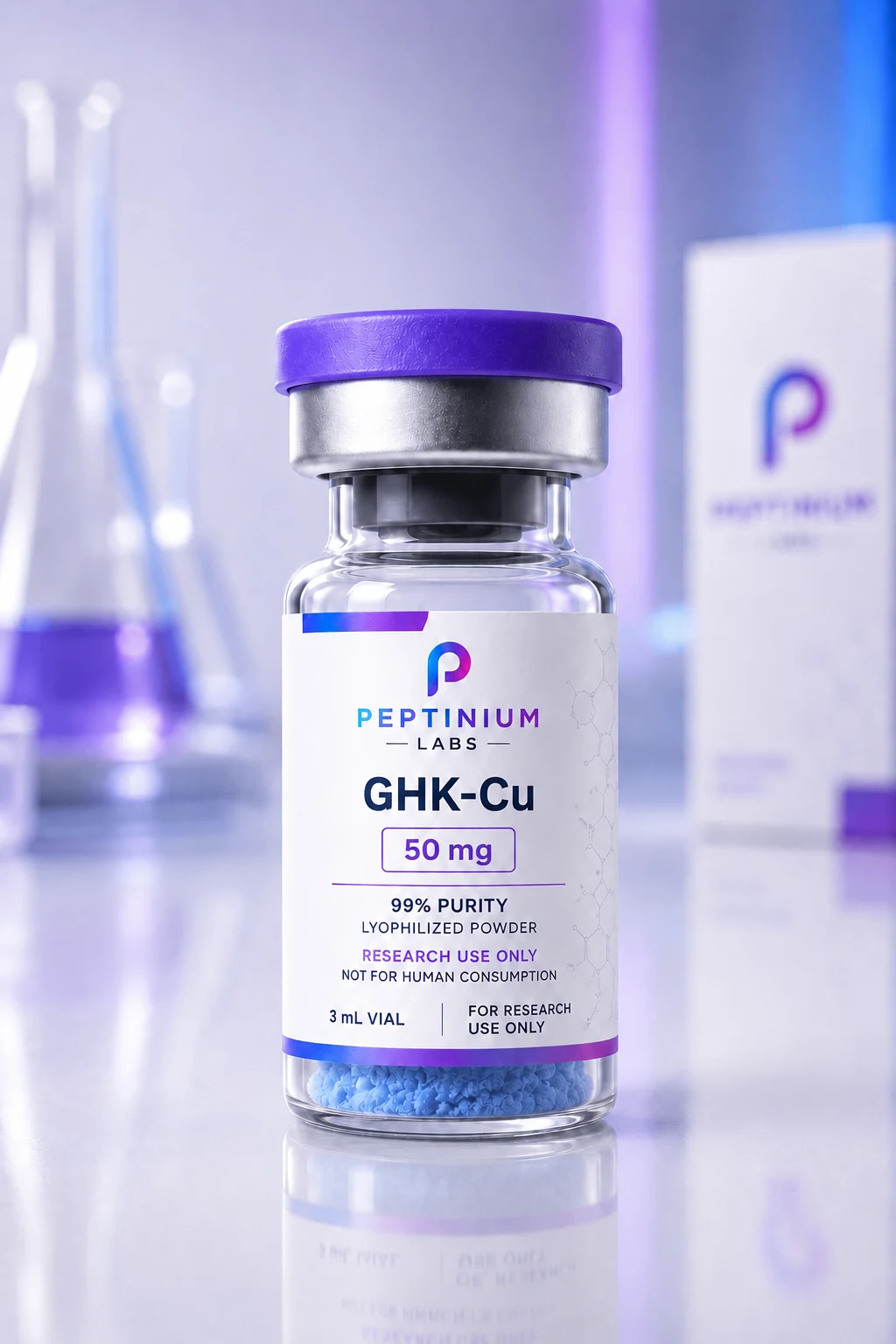
GHK-Cu
Evidence score · 3 ref. PubMed / PMCLyophilized research compound · CAS 89030-95-5
Copper tripeptide (Gly-His-Lys-Cu²⁺) — reference reagent for in vitro studies of matrix remodeling.
Not intended for veterinary, diagnostic or therapeutic use. No indication for in vivo use. To be handled exclusively by qualified personnel.
- CAS No.
- 89030-95-5
- Molecular weight
- 402.92 g/mol
- Molecular formula
- C14H22CuN6O4
Effects documented in the literature
Work by Pickart and Margolina (PMC6073405) showed that GHK-Cu modulates the expression of more than 4,000 human genes, mainly related to tissue repair, angiogenesis, and the anti-inflammatory response. In vitro, the tripeptide stimulates dermal fibroblast proliferation, increases the synthesis of type I collagen, elastin, glycosaminoglycans, and decorin. It promotes SOD2 expression and activates the antioxidant Nrf2 pathway. At the cellular level, the studies describe a modulation of pro-inflammatory cytokines (decreased TNF-α, IL-6) and stimulation of VEGF promoting microvessel formation. Effects on wound healing and hair follicle pigmentation have also been documented in in vitro dermatological models. These data come from the scientific literature and are provided strictly for informational purposes in a research context. This product is not intended for veterinary, diagnostic or therapeutic use and is not recommended for any use outside a scientific, professional and research setting. [1][2][3]
Background, storage, reconstitution
- Research background
- GHK-Cu is an endogenous peptide-copper complex used as an in vitro research tool for the study of fibroblasts, collagen synthesis, and gene expression related to regeneration.
- Storage
- Lyophilized: −20 °C, protected from light. Reconstituted: 2–8 °C.
- Reconstitution (lab)
- Sterile bacteriostatic water.→ Dilution calculator
PubMed references
- View on PubMed →[1] PubMedPMID 29986520
- View on PMC →[2] PMCPMC5332963
- View on PMC →[3] PMCPMC5295439
What our customers say
No review yet for this product.
Leave a review
Sign in to your account to leave a review.
Sign in