Why Is GHK-Cu Blue? The Chemistry of the Peptide–Copper Complex
Most peptides are white; GHK-Cu is a clear blue. The colour comes from the copper(II) ion and the way the tripeptide holds it.
Contents
A vial of lyophilized peptide almost always contains a white powder. GHK-Cu is the exception: its powder and its solution are blue. The colour is not an added dye: it is the chemical signature of the copper bound to the peptide.
A tripeptide and a metal ion
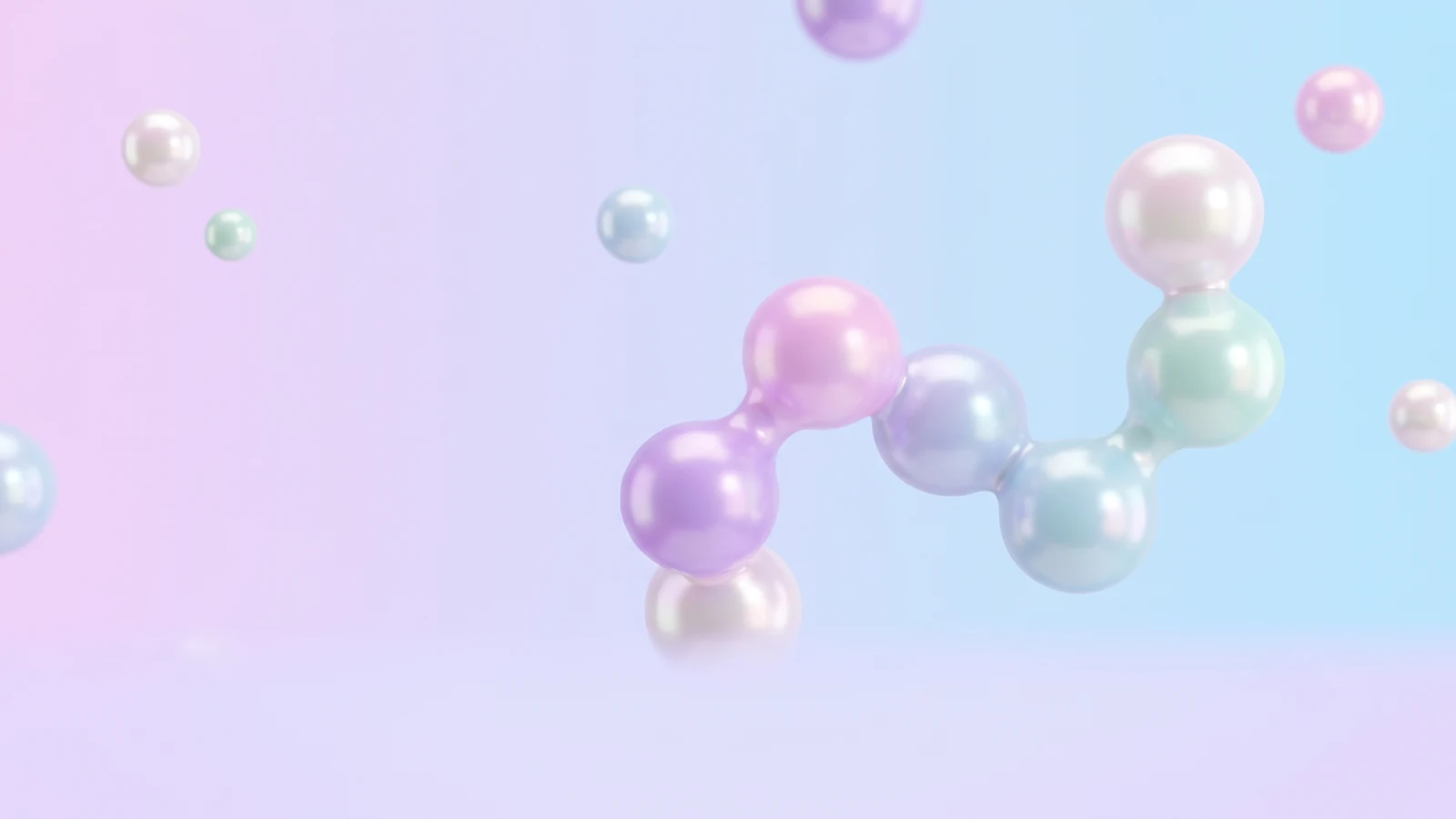
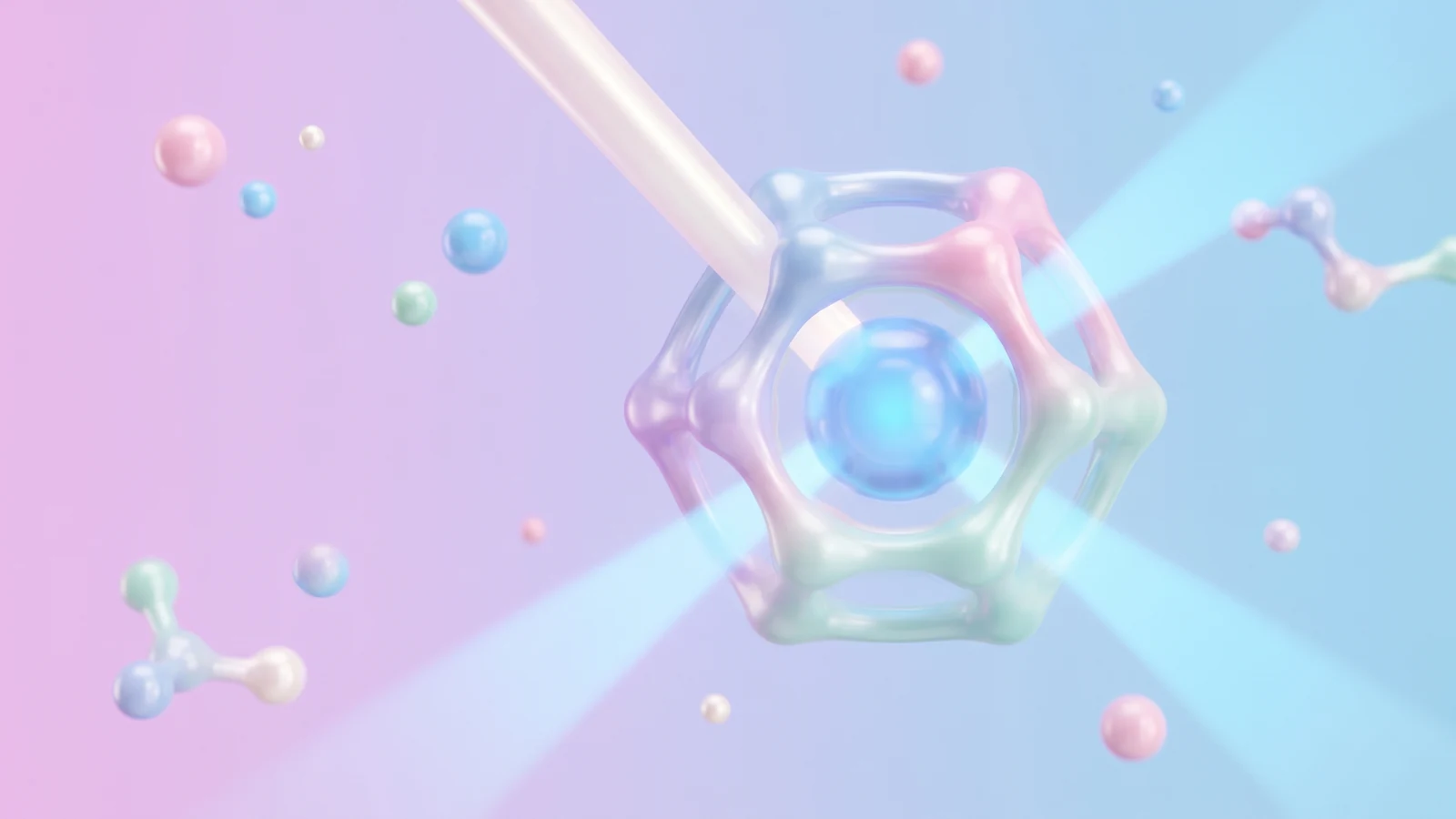
GHK is a tripeptide made of three amino acids: glycine, histidine, lysine. On its own, it is colourless. "Cu" indicates that it is associated with a copper(II) ion, written Cu²⁺. The peptide acts as a ligand: it surrounds and holds the ion, mainly through the nitrogen at the glycine end, a nitrogen of the peptide bond and a nitrogen of the histidine ring. The literature describes a high affinity of GHK for copper(II).
Where does the blue come from?
The colour of a substance depends on the light it absorbs. The copper(II) ion has nine electrons in its *d* orbitals. When atoms bind around it, these orbitals no longer all have the same energy, and an electron can move from one to another by absorbing a photon of visible light: this is a d-d transition.
- The absorbed energy corresponds to red-orange light.
- The eye perceives the complementary colour: blue.
- The exact shade depends on the atoms surrounding the copper and their geometry.
The same principle colours hydrated copper sulfate or a solution of copper salts blue.
Powder and solution: normal shades
- The lyophilized powder ranges from light blue to blue-violet depending on its compactness and the light.
- The solution is a more or less deep blue depending on the concentration: the more diluted, the paler.
These variations in shade are expected and do not, on their own, signal a problem.
What colour does, and does not, allow you to conclude
The blue colour indicates the presence of complexed copper. It says nothing about the peptide's purity, the exact ratio of peptide to copper, or the absence of colourless impurities. Only a certificate of analysis demonstrates that (see how to read a certificate of analysis). On the other hand, a marked and unexpected colour change after reconstitution (greenish, brownish, cloudy) justifies discarding the solution (see cloudy solution after reconstitution).
To learn more
Research Use Only (RUO). This article explains the chemistry of a laboratory reagent. It constitutes neither a recommendation for use in humans or animals nor a therapeutic claim.