
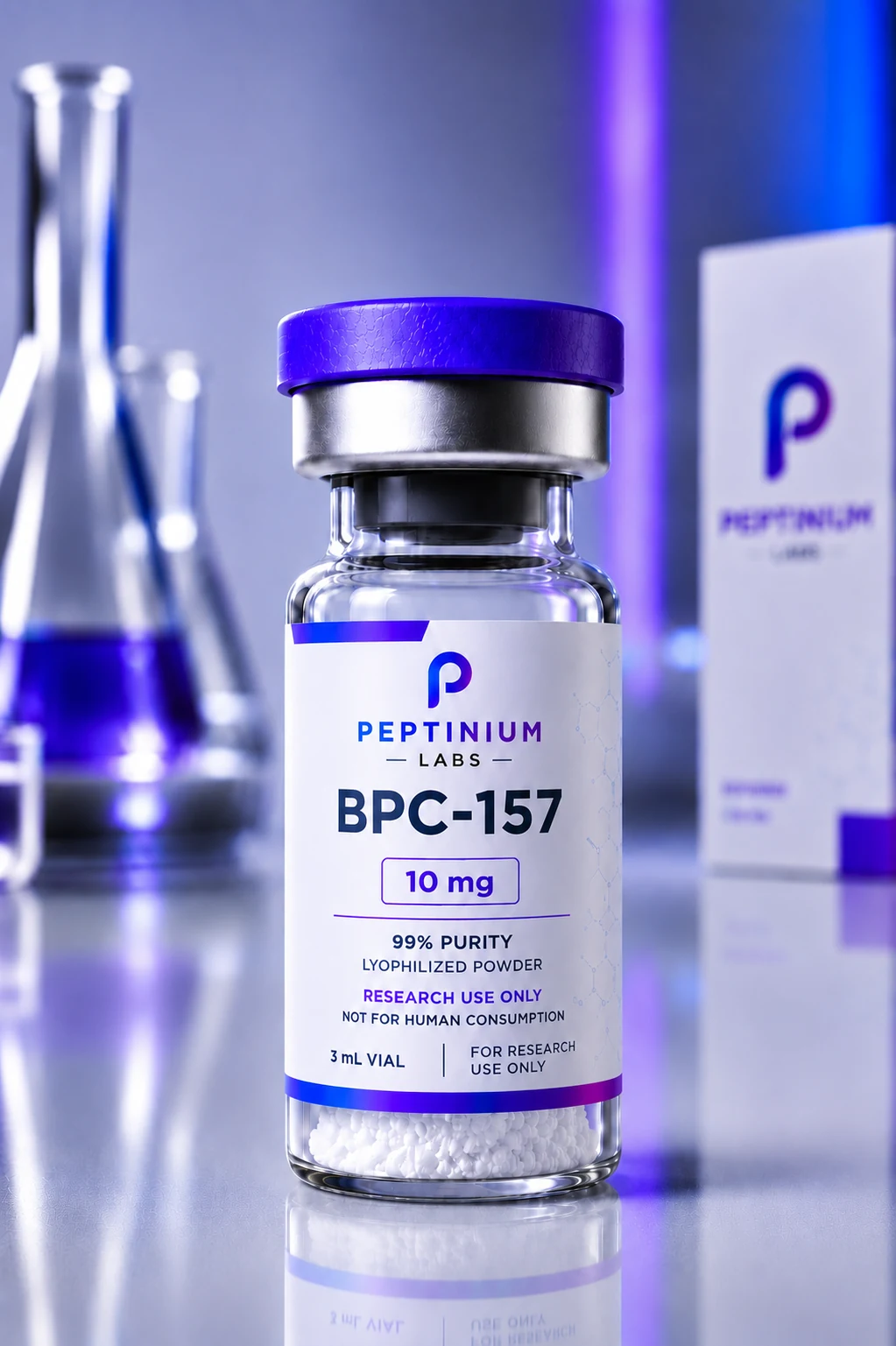
BPC-157
Evidence score · 3 ref. PubMedLyophilized research compound · CAS 137525-51-0
Pentadecapeptide studied in vitro for its effects on cellular models of tissue repair.
Not intended for veterinary, diagnostic or therapeutic use. No indication for in vivo use. To be handled exclusively by qualified personnel.
- CAS No.
- 137525-51-0
- Molecular weight
- 1419.5 g/mol
- Molecular formula
- C62H98N16O22
Effects documented in the literature
BPC-157 (Body Protection Compound) is a pentadecapeptide isolated from human gastric juice. Studies (PMID 30915550, PMC6271067, PMC8275860) describe activation of the VEGFR2 → AKT → eNOS pathway leading to accelerated angiogenesis. At the cellular level, the peptide stimulates fibroblast migration, accelerates granulation tissue formation, and promotes tendon and muscle regeneration via the expression of FAK (Focal Adhesion Kinase) and paxillin. Preclinical models show modulation of the NO (nitric oxide) axis, upregulation of serotonin and dopamine receptors in the enteric nervous system, and gastrointestinal cytoprotection via stabilization of tight junctions. No significant change in systemic hormones (cortisol, GH, IGF-1) has been reported. These data come from the scientific literature and are provided strictly for informational purposes in a research context. This product is not intended for veterinary, diagnostic or therapeutic use and is not recommended for any use outside a scientific, professional and research setting. [1][2][3]
Background, storage, reconstitution
- Research background
- Synthetic peptide fragment used as a research tool in in vitro assays of angiogenesis and cell migration.
- Storage
- Lyophilized: −20 °C. Reconstituted: 2–8 °C.
- Reconstitution (lab)
- Sterile bacteriostatic water.→ Dilution calculator
PubMed references
- View on PubMed →[1] PubMedPMID 20225319
- View on PubMed →[2] PubMedPMID 34829776
- View on PubMed →[3] PubMedPMID 16583442
What our customers say
No review yet for this product.
Leave a review
Sign in to your account to leave a review.
Sign in