
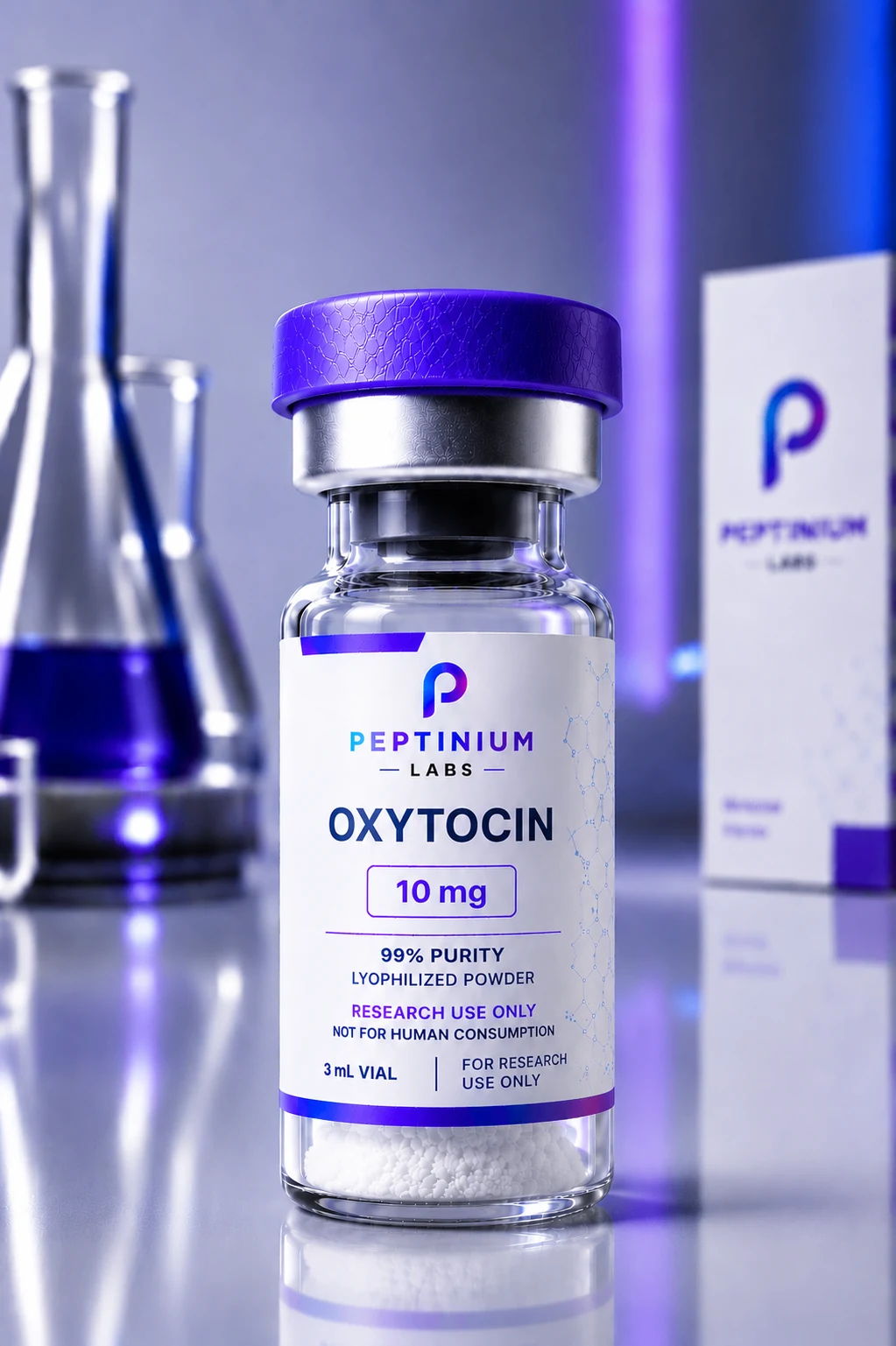
Oxytocine
Evidence score · 3 ref. PMCLyophilized research compound · CAS 50-56-6
Cyclic nonapeptide — reference tool for in vitro study of the OXTR receptor.
Not intended for veterinary, diagnostic or therapeutic use. No indication for in vivo use. To be handled exclusively by qualified personnel.
- CAS No.
- 50-56-6
- Molecular weight
- 1007.19 g/mol
- Molecular formula
- C43H66N12O12S2
Effects documented in the literature
Oxytocin is a cyclic nonapeptide synthesized by the paraventricular and supraoptic nuclei of the hypothalamus. Studies (PMID 21750565, PMC3656338) describe activation of the OXTR receptor coupled to Gαq, leading to intracellular calcium mobilization via the PLC/IP3 pathway. At the hormonal and behavioral level, the studies document modulation of social and affiliative behaviors, reduced amygdala response to social stress, decreased cortisol, and modulation of serotonin and dopamine. Peripherally, OXTR is present in the uterus, mammary glands, and osteoclasts; in vitro, oxytocin modulates bone remodeling and the proliferation of pancreatic β-cells. These data come from the scientific literature and are provided strictly for informational purposes in a research context. This product is not intended for veterinary, diagnostic or therapeutic use and is not recommended for any use outside a scientific, professional and research setting. [1][2][3]
Background, storage, reconstitution
- Research background
- Neurohypophyseal hormone used as a reference ligand in the in vitro characterization of the oxytocin receptor.
- Storage
- Lyophilized: −20 °C. Reconstituted: 2–8 °C.
- Reconstitution (lab)
- Sterile bacteriostatic water.→ Dilution calculator
PubMed references
- View on PMC →[1] PMCPMC7951958
- View on PMC →[2] PMCPMC5474129
- View on PMC →[3] PMCPMC3936960
What our customers say
No review yet for this product.
Leave a review
Sign in to your account to leave a review.
Sign in