
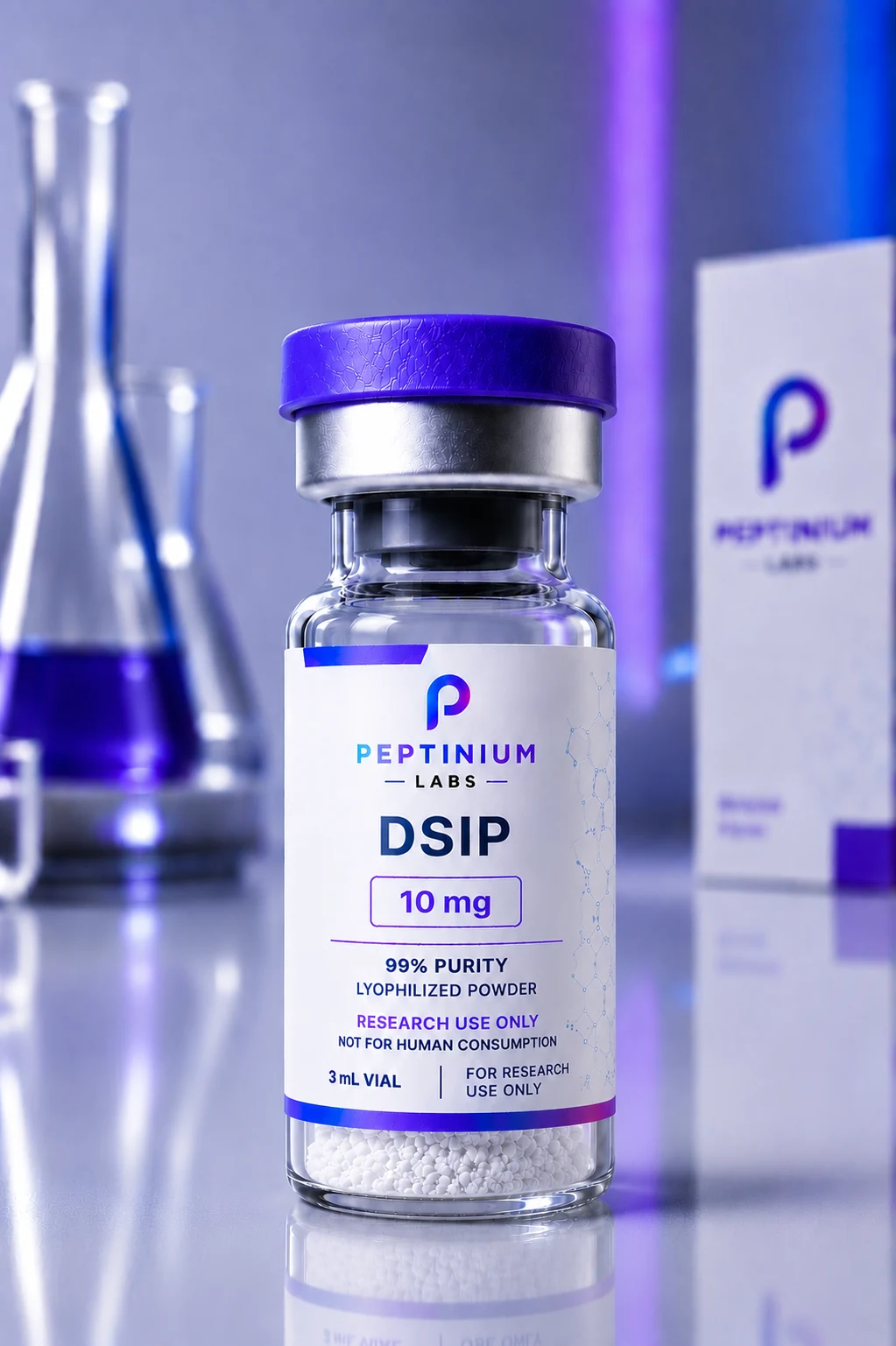
DSIP
Evidence score · 3 ref. PubMedLyophilized research compound · CAS 62568-57-4
Delta Sleep-Inducing Peptide — nonapeptide studied in vitro for its effects on circadian rhythms and oxidative stress.
Not intended for veterinary, diagnostic or therapeutic use. No indication for in vivo use. To be handled exclusively by qualified personnel.
- CAS No.
- 62568-57-4
- Molecular weight
- 848.81 g/mol
- Molecular formula
- C35H48N10O15
Effects documented in the literature
DSIP (Delta Sleep-Inducing Peptide) is a nonapeptide isolated from the blood of rabbits in induced delta sleep. Studies (PMID 6087901, PMID 6504737) describe modulation of delta EEG waves in preclinical models, attenuation of somatostatin release, and modest stimulation of GH. At the hormonal level, the studies observe a reduction in basal cortisol, normalization of the HPA axis under chronic stress conditions, and a transient increase in LH. In vitro, DSIP shows antioxidant properties (reduced lipid peroxidation, increased SOD and catalase). Neuroprotective and anti-nociceptive effects have also been documented. These data come from the scientific literature and are provided strictly for informational purposes in a research context. This product is not intended for veterinary, diagnostic or therapeutic use and is not recommended for any use outside a scientific, professional and research setting. [1][2][3]
Background, storage, reconstitution
- Research background
- Endogenous nonapeptide used as an in vitro research tool for characterizing the modulation of delta sleep and stress responses.
- Storage
- Lyophilized: −20 °C. Reconstituted: 2–8 °C.
- Reconstitution (lab)
- Sterile bacteriostatic water.→ Dilution calculator
PubMed references
- View on PubMed →[1] PubMedPMID 6895513
- View on PubMed →[2] PubMedPMID 1299794
- View on PubMed →[3] PubMedPMID 6145137
What our customers say
No review yet for this product.
Leave a review
Sign in to your account to leave a review.
Sign in