
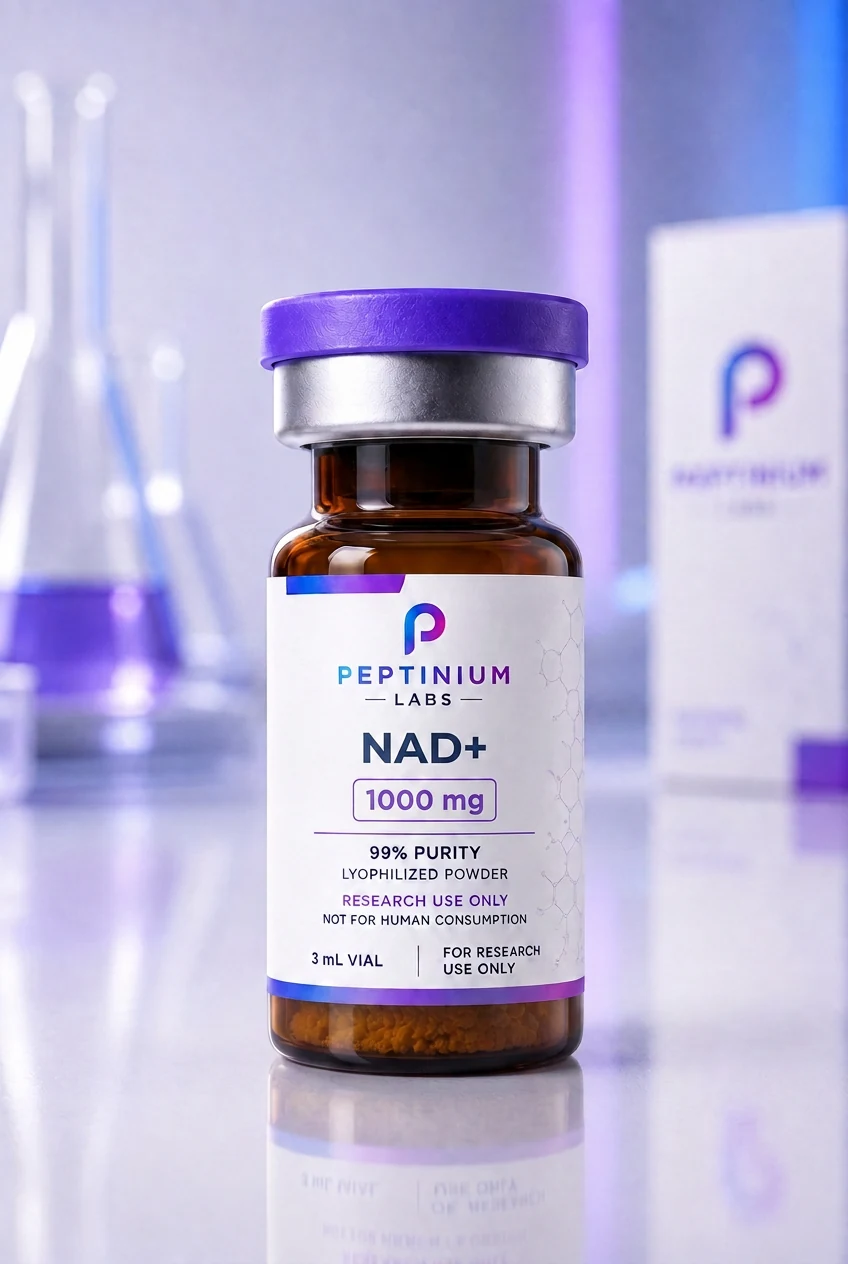
NAD+
Evidence score · 3 ref. PMCLyophilized research compound · CAS 53-84-9
Nicotinamide Adenine Dinucleotide — reference cofactor for in vitro study of cellular energy metabolism.
Not intended for veterinary, diagnostic or therapeutic use. No indication for in vivo use. To be handled exclusively by qualified personnel.
- CAS No.
- 53-84-9
- Molecular weight
- 663.43 g/mol
- Molecular formula
- C21H27N7O14P2
Effects documented in the literature
NAD+ (Nicotinamide Adenine Dinucleotide) is an essential cofactor for cellular oxidation-reduction reactions and the obligatory substrate of sirtuins (SIRT1-7), PARPs (Poly-ADP-ribose polymerases), and CD38. Studies (PMC10692436, PMC9512238, PMID 37971292) describe a progressive decline in intracellular NAD+ levels with age, correlated with a decline in mitochondrial function and DNA repair. Elevating NAD+ levels in vitro restores SIRT3 activity (deacetylation of mitochondrial proteins), improves fatty acid β-oxidation, and stimulates mitochondrial biogenesis via the PGC-1α pathway. At the hormonal level, the studies describe improved insulin sensitivity and modulation of tryptophan metabolism via the kynurenine pathway. Observed effects include reduced markers of cellular senescence (p16, p21) and increased autophagy. These data come from the scientific literature and are provided strictly for informational purposes in a research context. This product is not intended for veterinary, diagnostic or therapeutic use and is not recommended for any use outside a scientific, professional and research setting. [1][2][3]
Background, storage, reconstitution
- Research background
- Central redox coenzyme used as an in vitro research tool for the study of sirtuins and mitochondrial metabolism.
- Storage
- Lyophilized: −20 °C, protected from light. Reconstituted: 2–8 °C.
- Reconstitution (lab)
- Sterile bacteriostatic water.→ Dilution calculator
PubMed references
- View on PMC →[1] PMCPMC10721522
- View on PMC →[2] PMCPMC6611812
- View on PMC →[3] PMCPMC8932245
What our customers say
No review yet for this product.
Leave a review
Sign in to your account to leave a review.
Sign in