
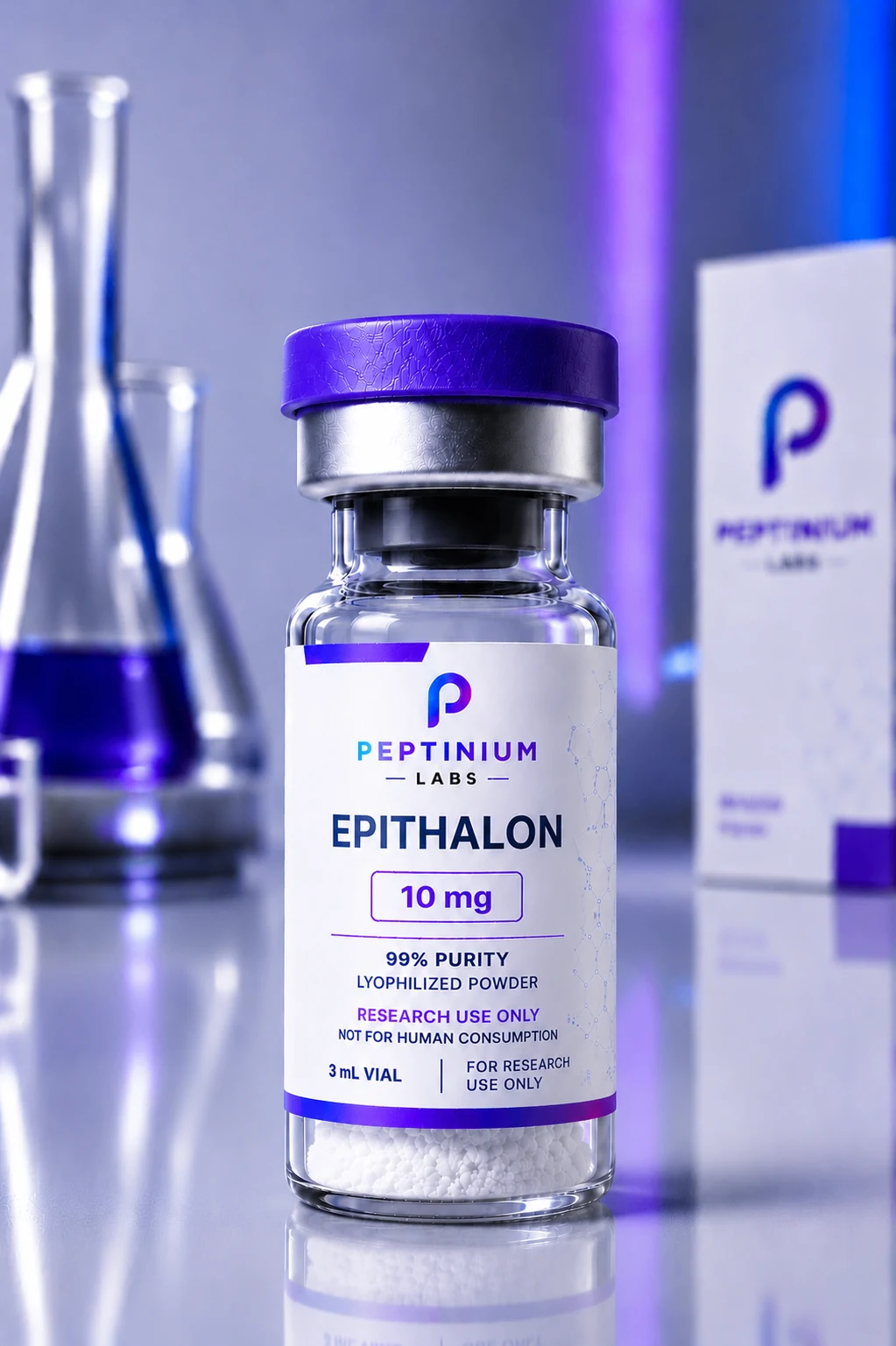
Epithalon
Evidence score · 3 ref. PubMed / PMCLyophilized research compound · CAS 307297-39-8
Tetrapeptide (Ala-Glu-Asp-Gly) — in vitro research tool for telomerase activity and cellular senescence.
Not intended for veterinary, diagnostic or therapeutic use. No indication for in vivo use. To be handled exclusively by qualified personnel.
- CAS No.
- 307297-39-8
- Molecular weight
- 390.35 g/mol
- Molecular formula
- C14H22N4O9
Effects documented in the literature
Epithalon (Epitalon) is a synthetic tetrapeptide inspired by pineal epithalamin. Studies (PMID 12937682, PMID 14708087) describe stimulation of the expression of the catalytic subunit of telomerase (hTERT) and telomere elongation in human fibroblast cultures. At the hormonal level, the studies observe normalization of the circadian rhythm of melatonin, partial restoration of senescent pineal function, and modulation of the gonadotropic axis in aged rats. Effects on cellular senescence (reduction of p21, senescence-associated β-galactosidase) and antioxidant activity have also been reported in vitro. These data come from the scientific literature and are provided strictly for informational purposes in a research context. This product is not intended for veterinary, diagnostic or therapeutic use and is not recommended for any use outside a scientific, professional and research setting. [1][2][3]
Background, storage, reconstitution
- Research background
- Synthetic peptide used as an experimental tool for the in vitro study of telomerase (hTERT) expression and pineal function.
- Storage
- Lyophilized: −20 °C. Reconstituted: 2–8 °C.
- Reconstitution (lab)
- Sterile bacteriostatic water.→ Dilution calculator
PubMed references
- View on PubMed →[1] PubMedPMID 29124531
- View on PMC →[2] PMCPMC12411320
- View on PubMed →[3] PubMedPMID 40141333
What our customers say
No review yet for this product.
Leave a review
Sign in to your account to leave a review.
Sign in