
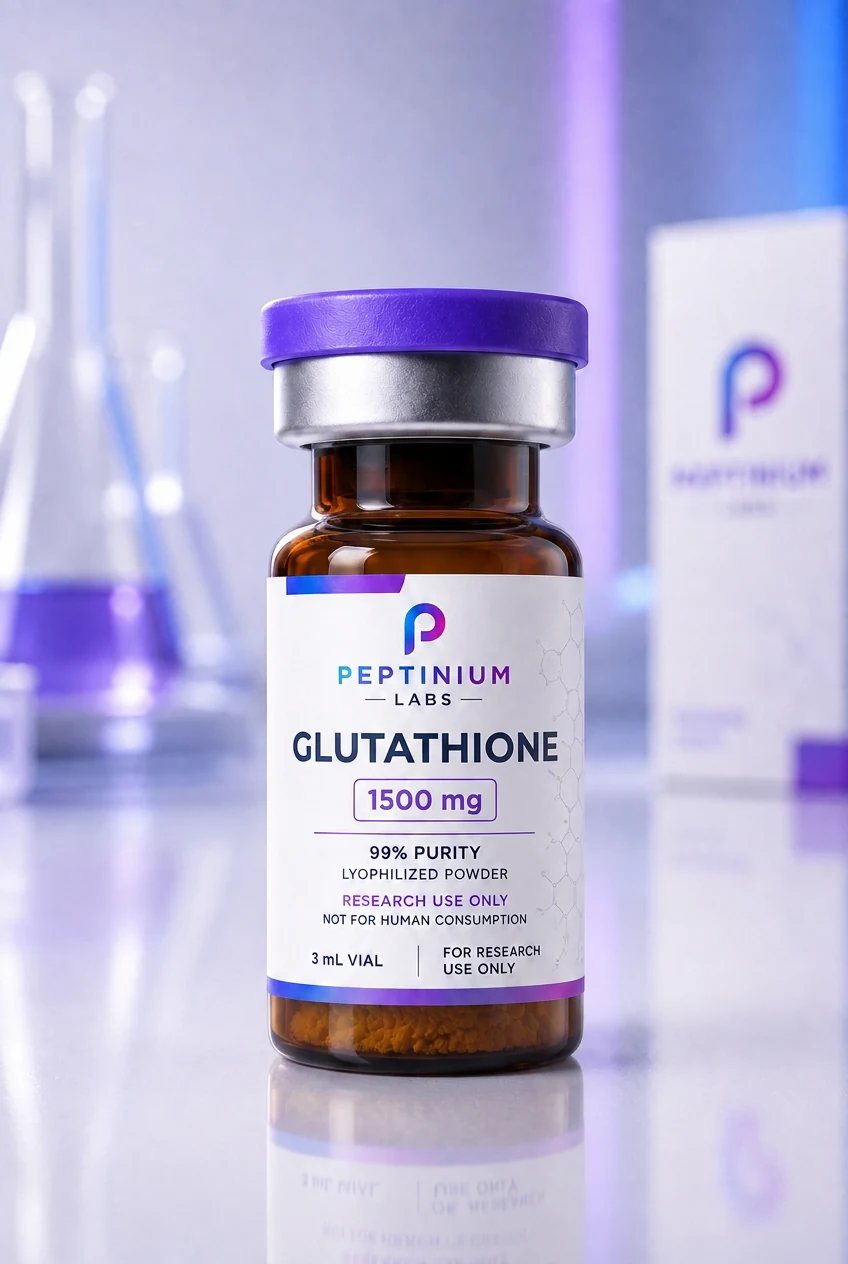
Glutathion
Evidence score · 3 ref. PubMed / PMCLyophilized research compound · CAS 70-18-8
L-γ-glutamyl-L-cysteinyl-glycine tripeptide — reference endogenous antioxidant for in vitro study of oxidative stress.
Not intended for veterinary, diagnostic or therapeutic use. No indication for in vivo use. To be handled exclusively by qualified personnel.
- CAS No.
- 70-18-8
- Molecular weight
- 307.32 g/mol
- Molecular formula
- C10H17N3O6S
Effects documented in the literature
Glutathione (GSH) is a tripeptide composed of glutamate, cysteine, and glycine, present at millimolar concentrations in the cytosol where it constitutes the main intracellular redox buffer. Published work (PMID 22995213, PMC6836009, PMID 29165986) describes its role as an obligatory cofactor of glutathione peroxidases (GPx), which reduce hydrogen peroxide and lipid hydroperoxides, and of glutathione-S-transferases (GST) involved in phase II conjugation of xenobiotics and electrophiles. The GSH/GSSG ratio is used in the laboratory as a quantitative indicator of cellular redox status; its decline is associated in vitro with NF-κB activation, lipid peroxidation, and entry into ferroptosis. The literature also describes regeneration of the antioxidants vitamin C and vitamin E, modulation of protein S-glutathionylation (a reversible redox signaling mechanism), and a role in preserving mitochondrial membrane potential. In melanocyte models, studies document tyrosinase inhibition and a shift from eumelanin to pheomelanin synthesis. Since the oral bioavailability of GSH is limited by hydrolysis by γ-glutamyl transpeptidase, the reconstituted lyophilized form is preferred in experimental protocols. These data come from the scientific literature and are provided strictly for informational purposes in a research context. This product is not intended for veterinary, diagnostic or therapeutic use and is not recommended for any use outside a scientific, professional and research setting. [1][2][3]
Background, storage, reconstitution
- Research background
- Thiol-containing tripeptide used as a research tool for the in vitro study of cellular redox balance, phase II detoxification, and mitochondrial protection.
- Storage
- Lyophilized: −20 °C, protected from light and oxidation. Reconstituted: 2–8 °C, use promptly (thiol oxidation).
- Reconstitution (lab)
- Sterile bacteriostatic water — mix gently, do not shake.→ Dilution calculator
PubMed references
- View on PubMed →[1] PubMedPMID 22995213
- View on PMC →[2] PMCPMC6836009
- View on PubMed →[3] PubMedPMID 29165986
What our customers say
No review yet for this product.
Leave a review
Sign in to your account to leave a review.
Sign in